The History of the NES: How Nintendo Saved the Video Game Industry
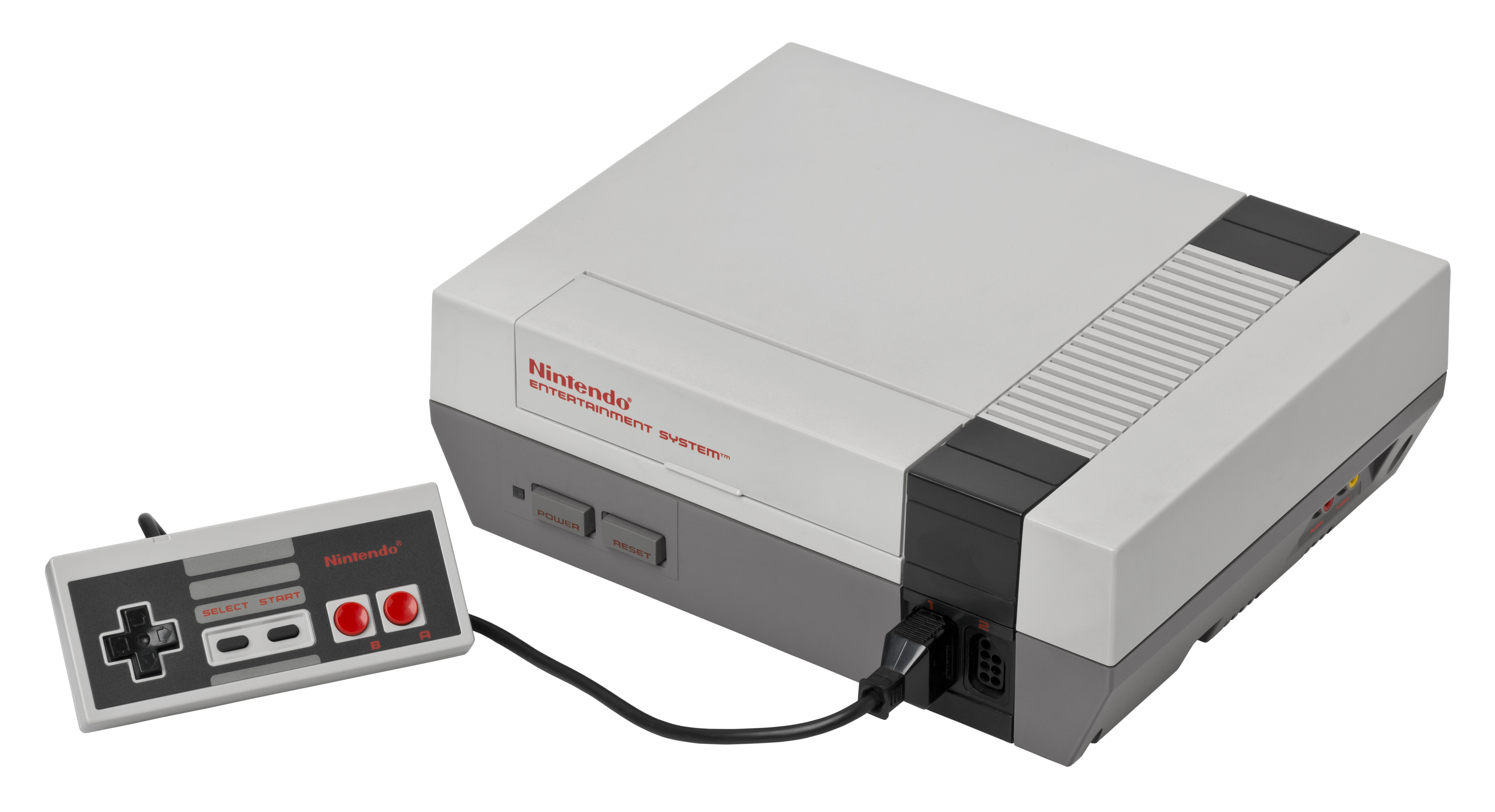
In 1983 the video game industry collapsed. In 1985 Nintendo launched the NES and rebuilt it from scratch. This is the story of how a Japanese toy company saved American gaming.
The Crash That Killed an Industry
In 1982, the Atari 2600 was selling millions of units and Atari was the fastest-growing company in American history. By 1983, the industry had lost $3 billion and retailers were selling games for pennies to clear warehouse space.
The causes were well-documented in retrospect: a flood of low-quality games that consumers couldn’t distinguish from good ones, the infamous ports of Pac-Man and E.T. that proved Atari’s home versions couldn’t match the arcade, and a retail market so saturated that trust in the entire category evaporated.
By 1984, stores had stopped stocking video games. The crash wasn’t a dip — it was an extinction event.
The Famicom in Japan
While the American market collapsed, Nintendo had been running the Famicom in Japan since July 1983. The Family Computer was a purpose-built home console with hardware that dwarfed the Atari 2600: a 1.79 MHz 6502-based CPU, 2KB of RAM, hardware sprites, and 52-color graphics capability. The launch software included Donkey Kong, Donkey Kong Jr., and Popeye — proven arcade hits that translated accurately to home play.
The Famicom sold 500,000 units in two months in Japan. It was clearly a success.
Nintendo’s chairman Hiroshi Yamauchi negotiated with Atari to distribute the Famicom in the United States. The deal fell apart when Coleco demonstrated a version of Donkey Kong running on its Adam computer without a license — a Coleco product that complicated Atari’s claim to exclusive rights. The partnership dissolved.
Nintendo would go to America alone.
The NES Launch Strategy
The American market in 1985 had no interest in video games. Retailers were gun-shy. Consumers had been burned. The entire category was considered dead.
Nintendo’s solution was to disguise the NES as something other than a video game console.
The product was marketed as an “entertainment system” — not a console. The original test launch in New York in October 1985 positioned the NES alongside a toy robot (R.O.B., the Robotic Operating Buddy) and a light gun (Duck Hunt) to suggest it was a toy system rather than a gaming platform. The retail strategy included a return guarantee to stores: if the product didn’t sell, Nintendo would take the inventory back. This removed the financial risk that was keeping retailers out of the category.
Super Mario Bros. launched alongside the NES, bundled as the game that would prove what the hardware could do. It demonstrated a level of precision, depth, and polish that the Atari library hadn’t approached.
Super Mario Bros. and the New Standard
Super Mario Bros. (1985) was not simply a platform game — it was a demonstration of a philosophy. Shigeru Miyamoto and Takashi Tezuka designed a game that taught players its own rules without a manual: the first level of World 1-1 introduces the mushroom, the flagpole, the pit, the enemy behavior, and the coin reward through gameplay encounter rather than explanation.
The game sold 40 million copies across all versions. It established Mario as a character, set the template for 2D platformer design, and proved that the NES could create experiences beyond what the arcade or Atari had offered.
The Legend of Zelda (1986) extended the proposition: a game with a save battery that persisted across sessions, a world that required exploration and return visits as the player gained new abilities, and a length that presupposed dozens of hours of engagement. It was the game that made the NES a legitimate long-form entertainment platform.
Third-Party Development and Seal of Quality
One of Nintendo’s most consequential decisions was the implementation of the 10NES lockout chip, a hardware authentication system that prevented unlicensed cartridges from running on the NES. To develop for the NES, third-party publishers had to sign agreements with Nintendo, pay licensing fees, and submit games for quality approval — games that received the official Seal of Quality.
This system, which was often criticized for anti-competitive reasons, had a practical effect: it filtered the NES library in a way the Atari 2600’s open platform had not been. The flood of unplayable budget titles that had killed Atari’s reputation couldn’t happen on the NES without Nintendo’s approval.
Companies like Capcom, Konami, Namco, and Taito brought their best arcade titles to the platform. Konami’s Contra (1987), Capcom’s Mega Man 2 (1988), and Namco’s Pac-Man port established the NES as the home of premium gaming.
The NES Library in Numbers
By the end of the NES’s production run in 1995, over 700 games had been licensed for the North American market. The console sold approximately 61 million units worldwide.
The library included works that defined entire genres:
- Action-platformers: Super Mario Bros. 1, 2, and 3; Mega Man 1-6; Castlevania 1-3; Contra
- RPGs: Dragon Warrior 1-4; Final Fantasy; Crystalis
- Adventure: The Legend of Zelda; Metroid; Kid Icarus
- Sports: Tecmo Bowl; RBI Baseball; Mike Tyson’s Punch-Out!!
- Shooters: Gradius; Life Force; 1942
The Legacy
The NES established several industry norms that persist today:
First-party software quality as the standard-setter for a platform — Mario games demonstrated what Nintendo’s hardware could do in ways that third-party launch software couldn’t match.
The save file — the Legend of Zelda’s battery-backed SRAM was not the first save system, but it popularized persistent game state for the mass market.
The D-pad — designed by Gunpei Yokoi for the Game & Watch series and adopted by the NES controller, the directional pad replaced joysticks as the standard control input and remains the foundation of every gamepad designed since.
Licensed quality control — the 10NES system and Nintendo’s licensing requirements created the template that Sony, Microsoft, and Nintendo still use for platform certification.
The video game industry went from declared dead in 1984 to generating more revenue than Hollywood films by 1989. The NES did not do this alone — but it did it first.
Where to Play NES Games Today
The Nintendo Switch Online service includes a rotating library of NES games with online multiplayer and rewind features. The NES Classic Edition (now discontinued) remains available on the secondary market with 30 pre-installed games. Original NES hardware and cartridges are widely available from retro game retailers, with original cartridge quality varying by storage conditions.
For many of the 700+ licensed NES games that never appear on official services, original hardware remains the only legitimate path to play.
Related Articles
The History of Video Game Music: From Beeps to Orchestras
Video game music evolved from single-voice beeps to full orchestral scores in twenty years. Koji Kondo, Nobuo Uematsu, Yuzo Koshiro — these composers defined an era and created music that people still listen to today.
Tekken: How Namco Built the Fighting Game Franchise That Outlasted Everyone
Tekken arrived in 1994 as a Virtua Fighter clone. It became the most enduring 3D fighting game franchise in history. This is the story of Kazuya, Heihachi, and the fighting game series that changed how we think about 3D combat.
Ocarina of Time: How Zelda Made the Leap to 3D
The Legend of Zelda: Ocarina of Time spent years as the highest-rated game in history. How did Nintendo's team solve 3D adventure design from scratch — and what made it so definitively good?
Best Retro Co-op Games to Play With a Friend
The best co-op games of the retro era — games designed for two players working together, from classic beat-em-ups to co-op platformers and RPGs.