Mortal Kombat Trilogy

Reviewed by Marcus Webb & Elena Castillo ·

Midway's 1996 compilation and the largest MK roster of the 2D era — Mortal Kombat Trilogy collects every fighter from MK1, MK2, and MK3/Ultimate MK3 into one game (33 fighters including hidden characters), updates the roster with new moves and Kombat Kodes, and delivers the definitive home version of the classic MK on PlayStation and Nintendo 64.
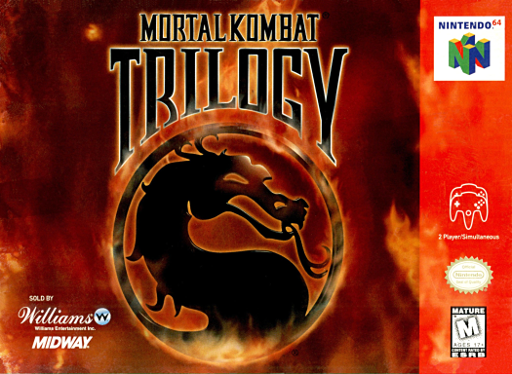
Mortal Kombat Trilogy box art

💡 Mortal Kombat Trilogy — Key Facts

  • Mortal Kombat Trilogy was developed by Midway and published by Midway
  • Released in 1996 on NINTENDO-64
  • Genre: Action, Fighting
  • We rate it 8.5/10 — highly recommended
  • Midway's 1996 compilation and the largest MK roster of the 2D era — Mortal Kombat Trilogy collects every fighter from MK1, MK2, and MK3/Ultimate MK3 into one game (33 fighters including hidden characters), updates the roster with new moves and Kombat Kodes, and delivers the definitive home version of the classic MK on PlayStation and Nintendo 64.

Overview

Every fighter from three games. One cartridge. The conclusion of the 2D Mortal Kombat era assembled before the series moved to 3D.

Mortal Kombat Trilogy arrived in 1996 with the answer to a question the previous three games had posed separately: what if everyone was playable at once?

The Complete Roster

33 fighters. Scorpion from MK1. Baraka from MK2. Kabal from MK3. Classic Sub-Zero alongside the Lin Kuei robot version. Shang Tsung in both his original old-man form and the younger MK2 version. MK1’s Kano and Johnny Cage, who had been absent from MK3.

The roster assembled characters from games that each represented a different state of the franchise. MK1’s digitized actors at their most rough. MK2’s refined palette. MK3’s run system and chain combos. All of it in one game meant that fighting as Johnny Cage against Kabal put characters from completely different mechanical eras in the same match.

The N64 version added Khameleon — the female ninja who cycled through Kitana, Jade, and Mileena’s movesets randomly. An exclusive character for a platform version was unusual; Khameleon remained an N64 distinction.

The Kombat Kodes

Before each match: six digits, entered on both sides of the versus screen using block, run, and low kick buttons. The codes were the game’s hidden content system — specific combinations unlocked Shao Kahn and Motaro as playable fighters, enabled one-hit death matches, disabled throws, or activated debug features that the design team left in.

The code discovery was community activity. Mid-1990s gaming magazines ran Kombat Kode columns. Players memorized specific sequences. The versus screen pause was a ritual moment where players might attempt to enter something neither opponent had tried before.

The Load Screens

The PS1 version loaded. Every match, every stage — disc access that interrupted the moment between rounds.

The N64 cartridge didn’t. This sounds trivial; it wasn’t. Fighting game rhythm depends on immediate feedback loops. The cartridge format’s elimination of load screens kept the competitive momentum that fighting games required.

Trilogy was one of the N64 cases where the cartridge format produced a technically superior version of a multi-platform game.

Our Review

8.5
Excellent / 10
🎮
Gameplay
★★★★★
🎨
Graphics
★★★★★
🎵
Audio
★★★★★
🔄
Replay
★★★★★

Gameplay

Mortal Kombat Trilogy is the complete 2D MK roster in one game: 33 playable fighters including MK1 characters like Liu Kang, Johnny Cage, and Scorpion; MK2 additions like Kung Lao and Baraka; MK3/UMK3 characters; and hidden fighters including Chameleon and Khameleon (N64 exclusive). Kombat Kodes entered before matches unlock special rules, alternate gameplay modes, and debug cheats. Tournament Ladder, Endurance Mode, 2-player versus, and Training available. All fighters retain their digitized-sprite visual style with MK3's run system alongside the original chain combo mechanics. The N64 version is generally considered the better port: better loading times, N64 cartridge removing PS1 disc load screens.

Graphics

Mortal Kombat Trilogy's digitized-sprite visuals represent the 2D MK aesthetic at its fullest roster — 33 fighters with individual fatalities, stage-specific backgrounds from across three games, and the series' realistic digital-photography-over-painted-background presentation.

Audio

The MK music — ominous electronic compositions and the iconic announcer voice — is present across the full roster. Stage music from all three games appears across the full selection.

Replayability

33-fighter roster provides enormous matchup variety, Kombat Kodes unlock hidden content and rules variations, and completing the ladder with each character across the full roster creates substantial single-player content.

Historical Significance

Mortal Kombat Trilogy (1996) arrived as the conclusion of the 2D MK era — before MK4 moved to 3D in 1997, Trilogy assembled every 2D fighter into one package. The N64 version was a showcase for cartridge advantages over disc: no load times between fights, faster access, Khameleon as an N64 exclusive not in the PlayStation version. The game coincided with Mortal Kombat's cultural peak — MK2 and MK3 had been the center of the ESRB founding debate, and Trilogy arrived as the series' reputation was both highest (cultural saturation) and beginning to face franchise fatigue. The complete roster created the lasting image of what 'classic MK' meant.

Pros

  • + 33-fighter complete 2D MK roster — largest classic-era roster
  • + N64 cartridge removes PS1 disc load screens
  • + Khameleon exclusive to N64 version
  • + Kombat Kodes for hidden modes and cheats
  • + Definitive single-package 2D MK experience

Cons

  • - Roster balance varied widely across characters from three different games
  • - N64 controller's limited face buttons vs. MK's six-button layout
  • - No new story content — compilation rather than continuation
  • - MK4 3D transition made this feel like a transitional product

Also Known As

MK TrilogyMortal Kombat Trilogy N64MKT

Mortal Kombat Trilogy FAQ

Who are all the fighters in Mortal Kombat Trilogy?
Mortal Kombat Trilogy's 33-fighter roster collects every character from the first three games plus hidden fighters. From MK1: Liu Kang, Johnny Cage, Sonya Blade, Kano, Shang Tsung (playable), Raiden, Sub-Zero (MK1 version), Scorpion, Reptile. From MK2: Kung Lao, Baraka, Mileena, Kitana, Jade, Jax, Shang Tsung (MK2 version). From MK3/Ultimate MK3: Smoke (robot), Cyrax, Sektor, Kabal, Sindel, Nightwolf, Stryker, Sheeva, Human Smoke (hidden), Ermac, Classic Sub-Zero, Classic Raiden. Hidden/boss characters: Shao Kahn, Motaro (playable via Kombat Kodes). N64-exclusive: Khameleon (female ninja who cycles through Kitana, Jade, and Mileena's moves). PlayStation version has Chameleon instead of Khameleon. The complete roster created a matchup variety that individual MK titles couldn't provide.
What are Kombat Kodes in Mortal Kombat Trilogy?
Kombat Kodes are six-digit codes entered by both players before a match using the block, run, and low-kick buttons. Each combination unlocks different effects: disabling throws, enabling one-hit kills, starting with no life bars, enabling specific fatality replays, or accessing debug features. Some Kombat Kodes unlocked hidden characters including Motaro and Shao Kahn as playable fighters. Others enabled 'Randper Kombat' where the fighter randomly changed between rounds. The code system was Mortal Kombat's way of hiding secrets within the game itself — tournament players memorized specific Kombat Kodes for particular effects, and discovery of new codes was a significant element of MK community activity in the mid-1990s.
Why is the N64 version of MK Trilogy considered superior to PlayStation?
The N64 version of Mortal Kombat Trilogy is generally favored over the PlayStation version for several technical and content reasons. Cartridge storage eliminated the disc load screens that PS1 fighting games suffered — matches in the PS1 version had loading pauses between stages that interrupted the game's flow. The N64 version includes Khameleon, a female ninja fighter exclusive to the N64 release who cycles through Kitana, Mileena, and Jade's movesets randomly between rounds. The PS1 version has Chameleon instead — a male ninja equivalent — but Khameleon was seen as the more interesting variant. The N64's cartridge format also meant faster overall performance. The tradeoff was the N64 controller's limited face buttons requiring different button mapping for MK's six-button layout.
Is Mortal Kombat Trilogy available on modern platforms?
Mortal Kombat Trilogy has not received an official modern re-release and is not currently on digital storefronts. The game's complete roster technically requires licensing from the original three games plus the additional characters, making a straightforward port legally complicated. The Mortal Kombat Arcade Kollection (2011, PC/PS3/360) included MK1, MK2, and MK3 as separate arcade titles rather than Trilogy specifically. Mortal Kombat 11 and later MK games include Klassic skins and nods to the 2D era. Physical N64 and PS1 cartridges are available in retro game markets. The PS1 version was available on PlayStation Network historically. The complete 2D MK experience Trilogy represents remains most accessible through original hardware or emulation.

Related Games

Games Like This →