Abe is a Mudokon slave working at RuptureFarms who discovers that his kind are the next product on the menu. His attempt to escape and liberate his enslaved people turns a dark industrial satire into one of the most original platformers of the PS1 era — with GameSpeak letting Abe possess enemies and command fellow Mudokons.
Games Like Oddworld: Abe's Exoddus
12 games similar to Oddworld: Abe's Exoddus — handpicked for fans of Action and Platformer and Puzzle games.
Top Games Similar to Oddworld: Abe's Exoddus
| Feature | Platform | Year | Score | Genre |
|---|---|---|---|---|
| Oddworld: Abe's Oddysee | PLAYSTATION | 1997 | 8.9 | Platformer, Puzzle, Action |
| Bomberman 64 | NINTENDO-64 | 1997 | 8.3 | Action, Platformer, Puzzle |
| Ape Escape | PLAYSTATION | 1999 | 8.8 | Platformer, Action |
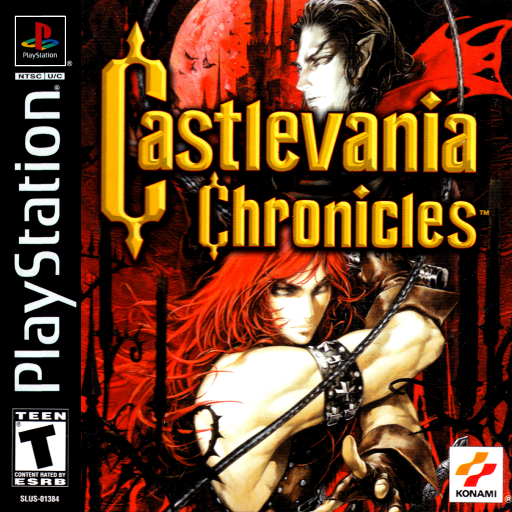
| Castlevania Chronicles | PLAYSTATION | 2001 | 8.4 | Action, Platformer |
| Crash Bandicoot 2: Cortex Strikes Back | PLAYSTATION | 1997 | 9 | Platformer, Action |
| Crash Bandicoot 3: Warped | PLAYSTATION | 1998 | 9.1 | Platformer, Action |
All 12 Games Like Oddworld: Abe's Exoddus
Hudson Soft's bold translation of Bomberman into 3D on the Nintendo 64. Bomberman 64 reinvented the series with a 3D platformer adventure mode featuring five worlds and memorable boss fights, alongside the traditional multiplayer battle mode. The pump mechanic — inflating bombs to increase blast radius — added a new strategic layer that made both modes feel distinct from every other Bomberman entry.
The first game to require the DualShock analog sticks — Ape Escape's 204-monkey catching adventure across 26 stages used every feature of Sony's then-new controller in creative ways.
Konami's 2001 PS1 package and the Western debut of the Sharp X68000 Castlevania — Castlevania Chronicles includes the 1993 X68000 computer original plus a redrawn 'Arranged Mode' with enhanced graphics and Simon Belmont with updated sprites, providing the most faithfully arcade-accurate classic Castlevania port alongside the most demanding difficulty of any entry in the franchise.
Naughty Dog's refinement of the Crash Bandicoot formula — adding the slide, body slam, and super-powered spin makes Crash more capable, and 27 stages with expanded variety mark it as the series' most balanced entry.
The commercial peak of the Crash Bandicoot series — Warped's time-travel premise introduces motorbikes, planes, sea-doos, and baby T-rex riding across 30 time-period stages, making it the most varied entry in the trilogy.
Naughty Dog's technically dazzling PlayStation launch platformer introduced the world to the wacky orange marsupial and demonstrated that 3D platforming could be precise, challenging, and visually spectacular. The game that made Sony's console a genuine rival to Nintendo.
Crystal Dynamics' 1998 PS1 3D platformer — Gex: Enter the Gecko follows the wisecracking gecko into the Media Dimension to defeat Rez across themed television worlds. Gecko wall-crawling and tail whip combat in a pop-culture-reference-heavy adventure that was one of PS1's notable 3D platformers alongside Spyro and Crash.
Capcom's 1997 PS1 Mega Man entry — Mega Man 8 features anime-quality cutscenes, eight Robot Masters including the fan-favorites Tengu Man and Frost Man, the Rush Super Adapter's return, and one of the franchise's most distinct visual presentations. Polarizing due to cutscene quality but admired for stage design and Mega Man legacy.
The best-received Mega Man X game after the original, X4 is the series' PS1 debut and the first to offer Zero as a fully playable alternative protagonist. With two complete campaigns, anime cutscenes, and the finest level design in the PS1-era X series, Mega Man X4 is the entry point most Mega Man fans recommend.
Capcom's 2000 PS1 action-platformer and the intended conclusion of the Mega Man X series — Mega Man X5 adds a time-limit mechanic threatening destruction of Earth, introduces dual selectable protagonists (X and Zero with substantially different combat systems), and features Axl Rose-inspired boss names in Western localization, making it Keiji Inafune's intended X series finale.
Capcom's 2001 PS1 action-platformer developed rapidly after Mega Man X5 — Mega Man X6 continues with Zero's apparent death, introduces Nightmare enemies that make stages harder dynamically, adds the Zero-like playable Gate and Nightmare bosses, and represents the final Mega Man X game developed entirely for 32-bit hardware.