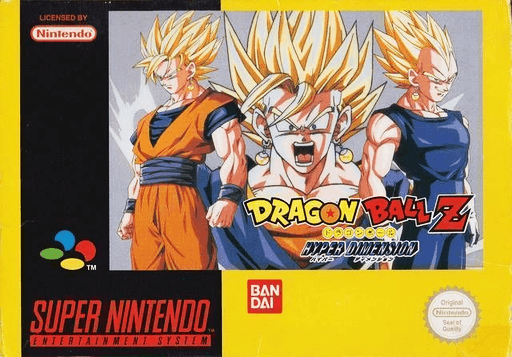
Bandai's 1996 SNES one-on-one fighting game and the final DBZ game on Super Nintendo — Dragon Ball Z: Hyper Dimension features large character sprites pushing SNES hardware limits, aerial combat with characters that can fly across the stage, ki charging system for super attacks, Story Mode following the Cell and Buu sagas, and is considered the finest 2D Dragon Ball Z fighting game of its era.
Games Like Teenage Mutant Ninja Turtles: Tournament Fighters
12 games similar to Teenage Mutant Ninja Turtles: Tournament Fighters — handpicked for fans of Fighting games.
Top Games Similar to Teenage Mutant Ninja Turtles: Tournament Fighters
| Feature | Platform | Year | Score | Genre |
|---|---|---|---|---|
| Dragon Ball Z: Hyper Dimension | SNES | 1996 | 8.8 | Action, Fighting |
| Dragon Ball Z: Super Butōden 2 | SNES | 1994 | 8.1 | Fighting |
| Killer Instinct | SNES | 1995 | 8.5 | Fighting |
| Mortal Kombat 3 | SNES | 1995 | 8.3 | Fighting |
| Mortal Kombat II | SNES | 1994 | 9 | Fighting |
| Mortal Kombat | SNES | 1993 | 8 | Fighting |
All 12 Games Like Teenage Mutant Ninja Turtles: Tournament Fighters
Bandai and TOSE's 1993 SNES fighting game based on the Dragon Ball Z Android and Cell arcs — Dragon Ball Z: Super Butōden 2 features 13 playable characters including Future Trunks, Android 18, Android 17, Piccolo, and Cell, with the series' signature energy-based combat and Super Saiyan transformations.
Rare's technically audacious port of the arcade fighter brings pre-rendered 3D character graphics and the signature Combo Breaker system to the SNES in a package that defied expectations for what 16-bit hardware could deliver. The game's roster of outlandish fighters — skeleton warriors, cyborgs, and a two-ton dinosaur — and its lengthy auto-combo chains gave it a distinct identity that set it apart from Street Fighter and Mortal Kombat contemporaries.
The controversial third MK brought a new armageddon story, run button, and combo system while controversially removing fan-favorites like Scorpion. The SNES version featured the updated Ultimate Mortal Kombat 3 content with the complete roster — making it the most complete home version available before 32-bit hardware arrived.
The Mortal Kombat that perfected the formula — MK II added 12 characters, Babalities, Friendships, expanded Fatalities, and the Outworld tournament setting that became the franchise's iconic backdrop.
The SNES port of Midway's blood-soaked arcade sensation sparked a cultural firestorm and directly triggered the creation of the ESRB ratings system — Nintendo's decision to replace blood with sweat and alter fatalities made this version the censored alternative to the Genesis port, but the underlying fighting game is a tense, strategic one-on-one brawler with a roster of digitized fighters that remains iconic. The controversy only amplified public fascination, and the game became one of the best-selling SNES titles of its era.
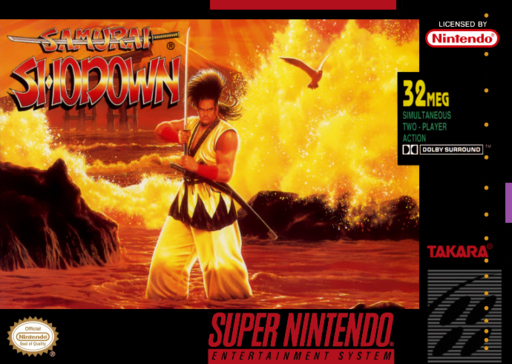
SNK's 1994 SNES port of the Neo Geo weapons-based fighting classic — Samurai Shodown brings the feudal Japan samurai fighter to SNES with 12 characters including Haohmaru, Nakoruru, and Earthquake, the weapon clash and disarm mechanics, rage mode that powers up attacks when health is low, and the game's characteristic one-hit-kill potential that distinguished it from contemporaries.
The definitive home version of the game that defined competitive fighting games. Street Fighter II Turbo brought arcade-quality fighting to the SNES with all four boss characters playable.
The definitive 16-bit Street Fighter experience. Super Street Fighter II Turbo added Akuma as a secret character, rebalanced the roster, and introduced super combos — changes that shaped competitive Street Fighter for years. The SNES version was the closest home approximation of the arcade experience available in 1994.
SNK's 1994 Neo Geo sequel and the definitive Art of Fighting experience — Art of Fighting 2 dramatically expands the roster to 12 characters (from 2+2 boss-only in AOF1), adds Robert Garcia, Yuri Sakazaki, and King as fully playable alongside refined special move systems, improves the Spirit Gauge balance, and develops the franchise's story connecting to Fatal Fury's timeline.
The Neo-Geo fighter that introduced the spirit gauge, zoom camera, and desperation moves to the genre. Art of Fighting's distinctive power-dependent gameplay created a different strategic rhythm from Street Fighter II, and its characters would later cross over into King of Fighters.
Light Weight and Square's 1997 PS1 sword-fighting game that rejected health bars entirely — Bushido Blade uses a realistic limb damage system where strikes to the body can kill or disable in one hit. A unique, contemplative fighting game about the geometry of sword combat rather than combo execution, set in feudal Japanese environments with freedom of movement.