Capcom's 1998 PS1 3D fighting game — Rival Schools follows students from competing high schools after mysterious faculty kidnappings, with a 3D arena fighting system emphasizing team assist mechanics and the Party Up feature where two characters can combine for powerful joint attacks. A unique visual style and assist system distinguish it from Capcom's Street Fighter contemporaries.
Best Video Games of 1998
All 47 classic games released in 1998 — with reviews, cheats, and trivia.
1998 Games — Page 2
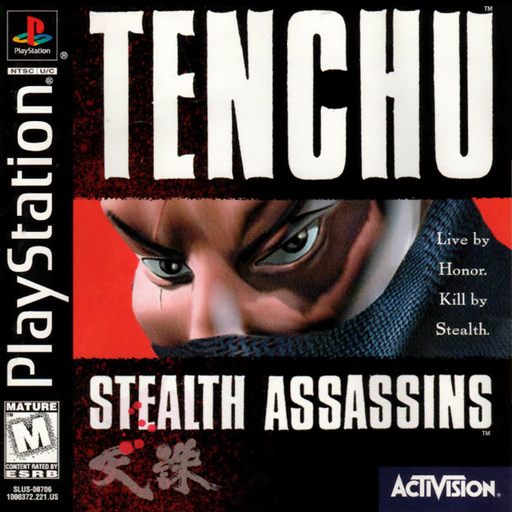
Sorted by ratingAcquire's 1998 PS1 stealth-action game and the originator of the PlayStation stealth genre — Tenchu: Stealth Assassins places players as feudal Japan ninja Rikimaru or Ayame completing assassination missions through populated environments using shadow movement, tool usage, and the grappling hook, establishing the stealth assassination mechanic that Metal Gear Solid's success that same year confirmed was a genre with mass appeal.
The Game Boy sequel that established Wario as one of Nintendo's most inventive platformer protagonists. Wario Land 2's invulnerability mechanic — Wario can't die, but getting hurt transforms him in useful ways — and its multiple branching story paths through the same levels encouraged complete exploration and replay.
Nintendo's snowboarding game built physics-based trick mechanics and courses designed around realistic mountain topography into a package that felt fundamentally different from the arcade snowboarders competing for the same market. The Legendary Eagle course remains one of the most technically impressive N64 tracks — a long, branching descent that rewards knowledge of its hazards and delivers a genuine sense of mountain speed that was unmatched on home hardware in 1998.
Square's survival horror RPG blends cinematic storytelling with turn-based combat and real-time enemy positioning in a mitochondrial horror story set across New York City — from Carnegie Hall to the Natural History Museum. The Active Time Battle-derived combat system, where protagonist Aya Brea repositions mid-combat to optimize attacks and avoid enemy abilities, created a genuinely novel hybrid that neither pure RPG nor pure horror games had attempted before.
Factor 5's landmark N64 flight action game — pilot iconic Star Wars vehicles across 16 missions recreating battles from the original trilogy, with an Expansion Pak mode that pushed N64 hardware to its visual limit.
The first Pokemon game to bring the franchise to 3D. Pokemon Stadium let players transfer their Game Boy teams to battle on the N64 in glorious rendered combat, watch Pokemon move realistically, and prove their mastery across five cups. The Stadium mode, Gym Leader Castle, and beloved minigames made it essential.
The light-gun arcade shooter that became the Dreamcast's best peripheral showcase. House of the Dead 2's branching narrative paths, cooperative two-player zombie-blasting, and gloriously cheesy voiced cutscenes — 'Goldman! Suffer like G did?' became gaming's most quoted bad dialogue — made it essential for Dreamcast party sessions.
The party game that defined competitive friendship destruction. Mario Party's board game structure combined with 50 minigames created an entirely new genre. The N64 game that turns any gathering into a lively tournament, complete with Bowser stealing stars and the infamous stick-spinning mini-games.
Sir Daniel Fortesque, a cowardly knight who died to the first arrow in his first battle and was reborn as a skeleton hero 100 years later, must defeat the sorcerer Zarok and earn his place in the Hall of Heroes. MediEvil is a beloved PlayStation classic blending gothic humor, inventive level design, and one of gaming's most charming protagonists.
The definitive digital adaptation of the Pokémon card game for Game Boy Color. Featuring 226 cards and a complete campaign against eight Club Masters, the Pokémon TCG GB introduced millions of players to the strategic depth of the physical card game in a format accessible without needing cards or an opponent.
Atlus and Racdym's 1998 N64 snowboarding party game — Snowboard Kids delivers cartoon-styled multiplayer snowboard racing for up to four players with weapon pickups (inspired by Mario Kart), colorful chibi-style characters, trick execution on slopes, and accessible racing mechanics that made it an N64 multiplayer staple.
Sonic's first fully realized 3D platformer and the Dreamcast's defining launch title brought six playable characters — each with distinct gameplay styles — a sprawling adventure hub world, and the Chao Garden life-simulation system into what became the most content-rich Sonic game ever released. Sonic Team's ambition occasionally outpaced the hardware's capabilities, but the sheer energy of the speed stages and the scope of the game's construction left an impression that defined what 3D Sonic could aspire to be.
The N64 dinosaur hunter sequel with some of the most memorable weapons in FPS history. Turok 2's Cerebral Bore — a tracking rocket that drills into enemies' skulls — became legendary, and its expansive levels, diverse enemies, and cooperative multiplayer made it the definitive Turok experience despite brutal early-game difficulty.
The first Tales game to reach Western audiences on home consoles, Tales of Destiny brought Namco's Linear Motion Battle System to PlayStation with up to four players in combat simultaneously. Stahn Aileron's story of sentient spirit swords called Swordians and an ancient war's aftermath established the Tales franchise's presence in the West.
Sega AM2's Dreamcast port of Virtua Fighter 3 — featuring the dodge button and uneven terrain stages that made VF3 controversial in arcades, and the complete 11-character roster including new additions Taka-Arashi (sumo) and Aoi (aikido). The Dreamcast's launch title fighting game and one of the most authentic arcade-to-home conversions of its era.
DMA Design's creative N64 puzzle-platformer where players control a microchip that possesses animal robots. Each animal — from bulldogs to polar bears to hamsters — has unique abilities needed to solve environmentally distinct puzzles. Space Station Silicon Valley's humor, inventiveness, and the chip-possession mechanic made it one of N64's most original games.
Square's quirky 1998 action-RPG featuring a miniature legendary swordsman summoned to save a kingdom — Brave Fencer Musashi combines real-time combat, enemy ability absorption, and a day/night time system with Square's production values and sense of humor. A charming alternative to Square's Final Fantasy dominance that built a cult following.
Crystal Dynamics' 1998 PS1 3D platformer — Gex: Enter the Gecko follows the wisecracking gecko into the Media Dimension to defeat Rez across themed television worlds. Gecko wall-crawling and tail whip combat in a pop-culture-reference-heavy adventure that was one of PS1's notable 3D platformers alongside Spyro and Crash.
Working Designs' final Saturn localization and one of their most elaborate productions — Magic Knight Rayearth blends action RPG combat with the CLAMP manga's distinctive art style, featuring three playable Magic Knights and Sega's impressive Saturn production values. A Saturn exclusive that became a collector's trophy for Working Designs completionists.
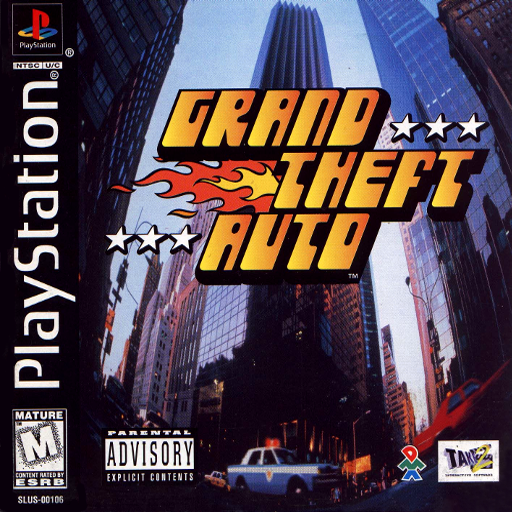
DMA Design's 1997-1998 top-down action game and the origin of one of gaming's most influential franchises — Grand Theft Auto places a criminal in three cities (Liberty City, San Andreas, Vice City debuting here by name) to complete missions for various crime bosses, with a wanted level system, free-roaming open world, and unprecedented violence-as-mechanics that launched a cultural controversy alongside a beloved franchise.
Midway's 1998 N64 fighting game and Mortal Kombat's transition to 3D — Mortal Kombat 4 keeps the series' signature fatalities and two-plane fighting while adopting polygon character models, introducing weapon combat, and returning fan favorites alongside new combatants in a post-Trilogy roster.
A direct predecessor to the Grand Theft Auto open-world formula from the same studio, Body Harvest drops a time-traveling soldier into sprawling free-roaming environments spanning multiple eras of human history under alien invasion. DMA Design's ambitious scope — hijack any vehicle, explore vast maps, battle massive alien bosses — resulted in a game rougher than its ambitions but historically fascinating as the missing link between top-down GTA and the 3D open-world games that followed.