The best Ninja Gaiden on NES — Ryu Hayabusa's second outing introduces shadow clones, longer stages, and better cutscene storytelling in a game considered by many to surpass the acclaimed original.
Best Classic Action Games
The complete collection of 336 vintage action games — with full reviews, cheat codes, and trivia.
Action Games — Page 5
Sorted by ratingRyu Hayabusa's first mission introduced cinematic storytelling to the NES with anime-style cutscenes, while delivering punishingly precise action-platformer gameplay that tested every ninja's patience.
Oddworld Inhabitants' 1998 PS1 sequel to Abe's Oddysee — Abe's Exoddus expands the Mudokon rescue formula with more GameSpeak commands, possession of new creature types, a "quick save" system replacing the limited lives of the original, and 300 Mudokons to rescue across more stages than the first game.
Team Andromeda's expansion of the Panzer Dragoon formula — a rail shooter with a dragon that evolves across six chapters based on player performance, and a deeper narrative expanding the original's mysterious world. Panzer Dragoon Zwei is considered the finest pure rail-shooter in the franchise before Saga transformed it entirely.
The first fully realized console MMORPG and the most ambitious game in Dreamcast history. Phantasy Star Online's online four-player cooperative dungeon crawling — accessible via the Dreamcast's built-in modem — created the template that console online gaming would follow for the next decade.
Jordan Mechner's 1989 Apple II classic on SNES — Prince of Persia follows an unnamed prisoner escaping the Grand Vizier Jaffar's dungeons to save the Princess in 60 minutes of game time, with rotoscoped animation creating realistic human movement and sword combat demanding careful guard engagement. One of the defining games of the early 1990s.
GAU Entertainment's 1993 Genesis mech action game — Ranger-X puts players in control of an advanced combat mech that gains power from sunlight (indoor stages weaken the mech; outdoor stages recharge it), with a deployable motorcycle companion unit and some of the most technically impressive Genesis visuals ever produced.
SNK's 1996 Neo Geo fighting game and the finest entry in the Fatal Fury series before Garou — Real Bout Fatal Fury Special refines the multi-plane combat system, features 19 characters including mid-boss characters from Real Bout, removes the ring-out system of Real Bout for cleaner competitive play, and is widely considered the peak of Fatal Fury's classic run with balanced roster and excellent movement.
Williams Electronics' 1982 twin-stick arcade masterpiece is the defining twin-stick shooter and the direct ancestor of games from Smash TV to Geometry Wars. Move and shoot independently in all directions while rescuing humans and surviving an overwhelming robot army. Pure, distilled action gaming.
Silicon & Synapse's 1993 SNES combat racer — Rock n' Roll Racing blends isometric racing with weaponized combat using real classic rock songs (including versions of Paranoid, Born to Be Wild, and Bad to the Bone), car upgrades, and a planetary circuit that requires winning races to advance. An early Blizzard Entertainment game (before the company rename) with a devoted following.
The psychological horror masterpiece that defined atmospheric dread in video games — Silent Hill's fog-shrouded town, creature design by Masahiro Ito drawing on a tradition stretching back to HR Giger, and Akira Yamaoka's industrial soundtrack created a genre-defining experience that Resident Evil's more action-oriented horror never attempted. Harry Mason's search for his daughter Cheryl generates existential unease through environmental storytelling and deliberate, uncomfortable pacing that still holds up against modern horror game design.
Konami's 1994 SNES sequel to Rocket Knight Adventures — Sparkster follows the opossum knight with his rocket pack across eight stages, with the charge-and-release rocket boost mechanic returning and refined. A direct sequel that improves on its already excellent predecessor with tighter stage design and enhanced rocket pack moments.
Insomniac's refinement of Spyro the Dragon — 30 levels with unique characters, expanded abilities (swimming, headbash, climbing), NPCs with voiced quests, and greater world variety than the original.
Konami's 1990 NES sequel to Contra — Super C (Super Contra in arcades) sends Bill and Lance back against the Red Falcon's alien forces with the same two-player run-and-gun action, returning overhead bird's-eye stages, and several new weapons. A tighter and more varied sequel that many players prefer to the original for its improved stage design.
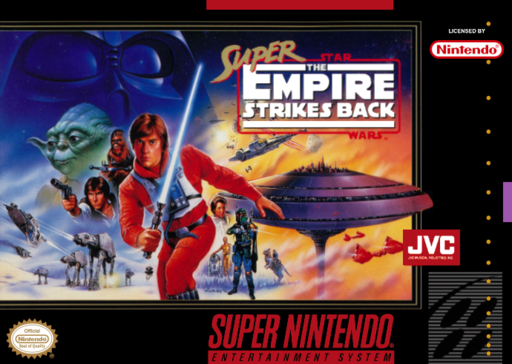
JVC's 1993 SNES action-platformer and the middle entry of the Super Star Wars trilogy — Super Star Wars: The Empire Strikes Back adapts Episode V with Luke's Force training on Dagobah, the Battle of Hoth with AT-AT walkers, Cloud City's lightsaber duel, and introduces the Force ability upgrade system where Luke learns new Force powers through gameplay progression.
The legendary SNES sequel to Ghosts 'n Goblins and Ghouls 'n Ghosts is one of the most beautifully crafted and mercilessly difficult platformers ever made. Arthur returns to fight demons across seven nightmarish stages in a game that demands precise play, patient learning, and multiple full completions just to see the true ending.
The definitive handheld Super Mario World — Super Mario Advance 2 ports the SNES classic to GBA with Luigi as a fully playable separate character (distinct moveset rather than a palette swap), Yoshi available from World 1, and voice clips for Mario and Luigi throughout, delivering the complete SMW experience in portable form.
Nintendo's SNES anthology of remade NES Mario classics — Super Mario All-Stars updates Super Mario Bros., Super Mario Bros. 2, Super Mario Bros. 3, and The Lost Levels with 16-bit graphics and saves.
Factor 5's 1993 SNES run-and-gun — Super Turrican brings the Amiga cult hit to SNES with tight action, a freeze ray that crystallizes enemies, smart bombs, a grappling hook wheel, and Chris Hülsbeck's acclaimed sci-fi soundtrack. One of the finest SNES action-shooters and a technical showcase for Factor 5's console expertise.
Whoopee Camp's overlooked 1998 PS1 platformer that blends action-adventure with mission-based exploration — Tomba! is one of gaming's most beloved hidden gems and one of the rarest and most expensive PS1 games in the secondary market. A feral boy rescuing pigs from Evil Pigs through connected world exploration that predates the 'Metroidvania' vocabulary.
The GBA launch title that cemented Wario Land as one of Nintendo's most inventive platformer series. Wario crashes his car into a pyramid, fights through four themed worlds, and must escape each level before time runs out after finding the golden passage. Bizarre enemies, inventive transformations, and an unforgettable soundtrack make this the high point of the Wario Land series.
One of the Sega Master System's greatest achievements and a pioneering open-world action RPG. Wonder Boy III casts players as a hero cursed to transform between five animal forms — Lizard-Man, Mouse-Man, Piranha-Man, Lion-Man, and Hawk-Man — each with unique abilities needed to explore the interconnected world. Remade in 2017, it remains a masterpiece of 8-bit design.
The definitive version of Falcom's classic action RPG duology, featuring CD-quality voice acting and the most celebrated RPG soundtrack of the 8-bit/16-bit transition period. Ys Book I & II's redbook audio, enhanced artwork, and seamless story connection between both games demonstrated what CD-ROM storage could achieve over cartridge hardware three years before the PS1 launched.
One half of Capcom's Zelda pair for Game Boy Color — Oracle of Ages focuses on puzzle-solving and time travel, sending Link between past and present Labrynna to restore peace and defeat Veran.