The psychological horror masterpiece that defined atmospheric dread in video games — Silent Hill's fog-shrouded town, creature design by Masahiro Ito drawing on a tradition stretching back to HR Giger, and Akira Yamaoka's industrial soundtrack created a genre-defining experience that Resident Evil's more action-oriented horror never attempted. Harry Mason's search for his daughter Cheryl generates existential unease through environmental storytelling and deliberate, uncomfortable pacing that still holds up against modern horror game design.
Konami Games
55 classic games published by Konami.
Konami's 1994 SNES sequel to Rocket Knight Adventures — Sparkster follows the opossum knight with his rocket pack across eight stages, with the charge-and-release rocket boost mechanic returning and refined. A direct sequel that improves on its already excellent predecessor with tighter stage design and enhanced rocket pack moments.
Konami's 1990 NES sequel to Contra — Super C (Super Contra in arcades) sends Bill and Lance back against the Red Falcon's alien forces with the same two-player run-and-gun action, returning overhead bird's-eye stages, and several new weapons. A tighter and more varied sequel that many players prefer to the original for its improved stage design.
The only mainline Castlevania on Genesis — Bloodlines introduces two playable protagonists (John Morris and Eric Lecarde) and a globe-trotting adventure through six European countries in a darker, more violent Castlevania than its SNES counterparts.
The GBA launch Castlevania that brought the Symphony of the Night formula to handheld — Circle of the Moon introduced the DSS card combo system and proved the Metroidvania formula translated perfectly to portable play.
Konami's definitive N64 soccer game: fluid ball physics, responsive controls, and the best football simulation available on Nintendo's platform. International Superstar Soccer 64 set the standard for console soccer games in 1997 and demonstrated the N64 analog stick's superiority for sports game precision.
Konami's 1993 SNES western run-and-gun — Sunset Riders follows bounty hunters Steve, Billy, Bob, and Cormano across the American frontier hunting wanted outlaws, with run-and-gun shooting, two-player co-op, and a wild west aesthetic that no other SNES action game captured. Arcade-faithful port with some exclusive SNES content.
Konami's NES port of the beloved 1989 TMNT arcade game — controlling Leonardo, Michelangelo, Donatello, or Raphael through eight stages of Foot Soldier combat, boss encounters including Bebop, Rocksteady, and Shredder, and two exclusive NES stages not in the original arcade. The definitive NES Turtles game and one of the best beat-em-ups on the platform.
NCS/Masaya's 1992 SNES mech action game — Cybernator (Assault Suits Valken in Japan) puts players in control of a bipedal combat suit fighting through a near-future war with a weapon system including vulcan cannon, missiles, laser, and a powerful shoulder punch. Physics-based movement with momentum and a narrative about military ethics distinguish it from contemporaries.
LucasArts' wildly creative top-down action game packed with horror movie homages across 55 stages. Zombies Ate My Neighbors tasked two players with rescuing neighbors from classic monsters — zombies, chainsaw maniacs, vampires, alien pods — with an arsenal ranging from water guns and silverware to bazookas. Two-player co-op elevated it to SNES cult classic status.
Konami's 1988 Famicom sequel to the NES classic — Gradius II: Gofer no Yabou introduces four selectable power-up configurations (each offering a different weapon load-out for the Vic Viper), adds Moai head stone formations as bosses, and delivers the series' expanded stage variety with Konami's characteristic scrolling-shooter technical mastery — a Japan-exclusive NES release that became a prized collector's cart.
The SNES launch Konami shooter and one of the most demanding horizontal shoot-em-ups ever made. Gradius III's weapon selection screen, power-up capsule system, and devastating final stages — plus the famous continue code NEMESIS that immediately destroys the player — made it the SNES's definitive hardcore shooter.
Konami's 1988 NES top-down military vehicle shooter — Jackal puts players in a jeep rescuing POWs from enemy installations across six missions. Two-player simultaneous co-op, upgradeable rocket launchers, and frantic top-down vehicle combat make it one of the NES's finest overhead shooters.
Konami's 1997 PS1 tactical RPG — Vandal Hearts follows Ash Lambert leading a party of soldiers through isometric grid-based battles in a medieval fantasy world, with a political narrative about a kingdom's collapse and the Blood Tear that influenced the power struggle. Accessible tactical RPG design that introduced many Western players to the strategy genre.
Konami's 1991 NES platformer based on the Warner Bros. animated series — Tiny Toon Adventures follows Buster Bunny and three selectable friends through six worlds rescuing Babs Bunny from Montana Max. Konami's characteristic platformer polish applied to the Looney Tunes-adjacent cast, with switchable character abilities and two-player alternating co-op.
Konami's SNES beat-em-up adaptation of Tim Burton's Batman Returns, featuring cooperative two-player combat against a Halloween carnival of villains. Batman Returns SNES offered significantly different gameplay from other platform versions — a slower, heavier brawler with grapple mechanics that matched the film's dark aesthetic.
The second GBA Castlevania — Harmony of Dissonance follows Juste Belmont through two parallel castle sub-dimensions simultaneously, with a furniture decoration system, boss rush mode, and spell book combinations adding depth.
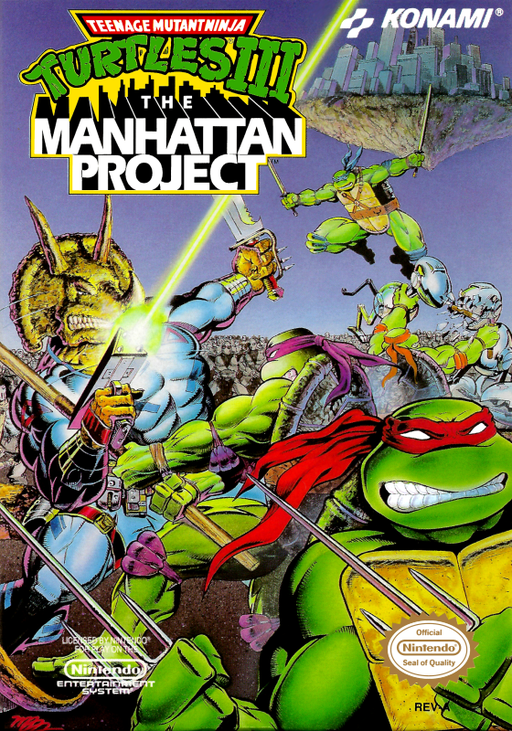
Konami's 1992 NES beat-em-up and the second side-scrolling TMNT NES game — Teenage Mutant Ninja Turtles III: The Manhattan Project improves on TMNT II: The Arcade Game with Super Jump moves unique to each turtle, a longer eight-stage campaign with Manhattan transported to Florida by Shredder's flying island, and a larger budget presentation that made it one of the NES's finest late-era beat-em-ups.
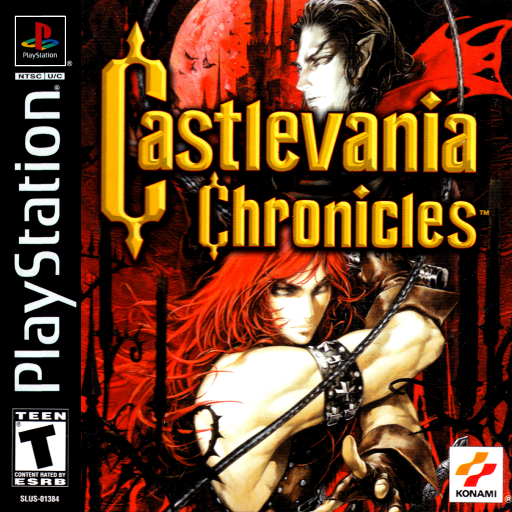
Konami's 2001 PS1 package and the Western debut of the Sharp X68000 Castlevania — Castlevania Chronicles includes the 1993 X68000 computer original plus a redrawn 'Arranged Mode' with enhanced graphics and Simon Belmont with updated sprites, providing the most faithfully arcade-accurate classic Castlevania port alongside the most demanding difficulty of any entry in the franchise.
Konami's 1995 SNES adaptation of Rondo of Blood — Castlevania: Dracula X is a re-imagining rather than a direct port, with redesigned stages, Richter Belmont as protagonist, the whip-combat and sub-weapon system of the classic Castlevania formula, and the rescue of Annette across eight stages of 16-bit gothic horror.
Konami's 1993 Game Boy spinoff of the Castlevania franchise — Kid Dracula (Akumajo Special: Boku Dracula-kun in Japan) puts players in control of a chibi young Dracula platforming through eight comedy-horror stages with growing magical powers, a parody aesthetic, and the humor that distinguished the NES Famicom original. A charming, high-quality alternative to straight Castlevania action.
The bizarre feudal Japan-meets-robots platformer starring Goemon, Ebisumaru, Sasuke, and Yae blends non-linear overworld exploration, town-based puzzle solving, and giant mech battles against boss fortresses into a package of cheerful, confident absurdism that N64 owners largely overlooked. Mystical Ninja Starring Goemon is one of the N64's most overlooked gems — a game that trusts the player's tolerance for the ridiculous and rewards that trust with genuine mechanical variety and charm.
Konami's 1987 NES military infiltration game — Rush'n Attack (Green Beret in Japan) follows a US Special Forces soldier infiltrating Soviet bases with a combat knife, grabbing enemy weapons on the fly. Two-player alternating co-op, six stages of increasing difficulty, and the defining knife-combat mechanic of the NES action genre.